
jueves, 2 de abril de 2015

domingo, 25 de enero de 2015
Korean Food (Hansik)
Hello!!!!!!! I'm Mony... and I'm going to talk about Korean food! A few people know that South Korea is customary to serve all the dishes at once (simultaneously) because there is no established order to eat. Furthermore, Korean cuisine is characterized by the variety of its dishes and some for its spicy and outstanding touch are
° Kimbap: A dish made with boiled rice seasoned with salt, oil and sesame seeds. Did you see? It looks like sushi! *-*

° Kimchi: The dish par excellence of the country. It is a soggy food that is made from fermented Chinese cabbage, flavored with spices (such as chili and ginger) and served with vegetables

° Kalbi: A dish that is prepared with pork or beef cooked and seasoned

° Jjim: This is boiled meats simmered with soy sauce

° Jeotgal: A preparation which consists of a combination of clams, oysters, fish and other ingredients

References: http://www.han-style.com/english/hansik/meaning.jsp
° Kimbap: A dish made with boiled rice seasoned with salt, oil and sesame seeds. Did you see? It looks like sushi! *-*
° Kimchi: The dish par excellence of the country. It is a soggy food that is made from fermented Chinese cabbage, flavored with spices (such as chili and ginger) and served with vegetables
° Kalbi: A dish that is prepared with pork or beef cooked and seasoned
° Jjim: This is boiled meats simmered with soy sauce
° Jeotgal: A preparation which consists of a combination of clams, oysters, fish and other ingredients
With this pictures I got hungry xD
References: http://www.han-style.com/english/hansik/meaning.jsp
National Symbols
Annyeong!!!! I'm back with this special publication... I'm going to talks about the National symbols in Korea... There are 2 important national symbols that are the national anthem and the national flower...

References: http://world.kbs.co.kr/spanish/korea/korea_aboutsymbol.htm

References: http://world.kbs.co.kr/spanish/korea/korea_aboutsymbol.htm
Holidays
Hi everybody!!!! In this publication I'm going to talk about holidays in Korea...
Like in every city, Korea Have many days to celebrate special days ... Well. I found some days acerca de esta kind of celebrations ...
-New Year's Day (January 1)
It is Considered the first day of the year is Very Important and Celebrated. 1 and 2 January and holidays are not working.
-Independence Movement Day (March 1)
This day commemorates the Declaration of Independence proclaimed on March 1, 1919, while I was under Japanese colonization. Occurs a reading of the statement, in a special ceremony at Tapgol Park in Seoul, Where the document was first read to the public.
South Koreans dressed in traditional costumes scream while carrying torches In Their hands During a ceremony to celebrate the Independence Movement Day, the anniversary of the uprising Against Japanese colonial rule in 1919.
-Buddha Birth Day (May 21)
The 8th day of the 4th Lunar month. In many Buddhist temples across the country, held solemn and elaborate rituals and lanterns are hung in the courtyards of temples.
-Children's Day (May 5)
On this day, parents dress up a little and take them to the playgrounds, amusement parks, zoos, or movies, for a full day of fun and games.
-Memorial Day (June 6)
Memorial Day is September aside to honor the soldiers and Civilians Who Have Given Their Lives for the country. The largest ceremony is held at the National Cemetery in Seoul.
-Liberation Day (August 15)
This day commemorates Japanese acceptance of the terms of surrender to the Allies and the RESULTING liberation of Korea in 1945.
-National Foundation Day (October 3)
This day commemorates the founding of the Korean nation in 2333 BC by the legendary god-king Dangun. At a ceremony is held at an altar, on top of the mountain Manisan in the province of Ganghwado. It is Said That the shrine was erected to thank porDangun His father and grandfather in heaven.
-Christmas (December 25)
Christmas is saved as a national holiday in Korea as in many other country clubs. But as I Mentioned in an entry, Christmas is more focused on spending some romantic moments with family, more to share With The family.

SPECIAL DAYS
-Labor Day (May 1)
Although Labor Day is not a national holiday, banks and business establishments are closed, and many people enjoy a day off.
-Father's Day (May 8)
The children show Their love and Respect for Their parents on This day. Fathers Day is a national holiday. Banks and shops are open for business.
-Constitution Day (July 17)
The proclamation commemorates the July 17, 1948, the Constitution of the Republic of Korea. It is not a national holiday, so banks and commercial establishments open to the public REMAIN.
-Hangeul Day (October 9)
Hangeul Day or Day of the Proclamation of Hangeul or Korean Alphabet Day is a commemoration held on October 9 in South Korea, to remember the creation of Hangeul, the native alphabet of the country, since esta day in 1446, was proclaimed for publishing the Hunmin Jeongeum. Not being a national holiday banks and shops are open.
I hope you'll get interesting country in this country because it's beautiful. (:
References: http://english.visitkorea.or.kr/enu/AK/AK_EN_1_5_2.jsp
Like in every city, Korea Have many days to celebrate special days ... Well. I found some days acerca de esta kind of celebrations ...
-New Year's Day (January 1)
It is Considered the first day of the year is Very Important and Celebrated. 1 and 2 January and holidays are not working.
-Independence Movement Day (March 1)
This day commemorates the Declaration of Independence proclaimed on March 1, 1919, while I was under Japanese colonization. Occurs a reading of the statement, in a special ceremony at Tapgol Park in Seoul, Where the document was first read to the public.
South Koreans dressed in traditional costumes scream while carrying torches In Their hands During a ceremony to celebrate the Independence Movement Day, the anniversary of the uprising Against Japanese colonial rule in 1919.
-Buddha Birth Day (May 21)
The 8th day of the 4th Lunar month. In many Buddhist temples across the country, held solemn and elaborate rituals and lanterns are hung in the courtyards of temples.
-Children's Day (May 5)
On this day, parents dress up a little and take them to the playgrounds, amusement parks, zoos, or movies, for a full day of fun and games.
-Memorial Day (June 6)
Memorial Day is September aside to honor the soldiers and Civilians Who Have Given Their Lives for the country. The largest ceremony is held at the National Cemetery in Seoul.
-Liberation Day (August 15)
This day commemorates Japanese acceptance of the terms of surrender to the Allies and the RESULTING liberation of Korea in 1945.
-National Foundation Day (October 3)
This day commemorates the founding of the Korean nation in 2333 BC by the legendary god-king Dangun. At a ceremony is held at an altar, on top of the mountain Manisan in the province of Ganghwado. It is Said That the shrine was erected to thank porDangun His father and grandfather in heaven.
-Christmas (December 25)
Christmas is saved as a national holiday in Korea as in many other country clubs. But as I Mentioned in an entry, Christmas is more focused on spending some romantic moments with family, more to share With The family.
SPECIAL DAYS
-Labor Day (May 1)
Although Labor Day is not a national holiday, banks and business establishments are closed, and many people enjoy a day off.
-Father's Day (May 8)
The children show Their love and Respect for Their parents on This day. Fathers Day is a national holiday. Banks and shops are open for business.
-Constitution Day (July 17)
The proclamation commemorates the July 17, 1948, the Constitution of the Republic of Korea. It is not a national holiday, so banks and commercial establishments open to the public REMAIN.
-Hangeul Day (October 9)
Hangeul Day or Day of the Proclamation of Hangeul or Korean Alphabet Day is a commemoration held on October 9 in South Korea, to remember the creation of Hangeul, the native alphabet of the country, since esta day in 1446, was proclaimed for publishing the Hunmin Jeongeum. Not being a national holiday banks and shops are open.
I hope you'll get interesting country in this country because it's beautiful. (:
References: http://english.visitkorea.or.kr/enu/AK/AK_EN_1_5_2.jsp
Let me tell you about...
Hi everybody..!
This video is about my classmate. I think that is a short video but I hope that you get fun..
Thank you for watch (: <3
This video is about my classmate. I think that is a short video but I hope that you get fun..
Thank you for watch (: <3
sábado, 24 de enero de 2015
Curious Things About Korea
This is a special entrie in my blog, because I'm going to talk about curious things in Korea. Let's see (:
*If you kiss you to boyfrien or girlfrien in public.. It looks like a lack of respect
*Most of the people in Korea where there are a few surnames. So, most of the surnames are Kim that represents the 21% of the Korean population, Yi, Lee or Rhee the 14%, Park of Pak 8%, Choi or Choe, Jeong or Chung, Jang or Chang, Han, Lim, etc.. Surnames just consists of a surname of onhe syllable and the name consists of two syllables. It means that just with the surname is know the person. In Korea, woman doesn't adopt the surname of her husban when she get married but her children take the father's surname
*Korean people believe that the number 4 and 13 are bad luck. Also in buildings there aren't the number 4 and 13 in the elevators because those numbers hear like "death" in Chinese.
*If you want to walk around the outer wall of Deoksugung Palace in the center of Seoul, opposite the Town Hall and the Plaza of Seoul. Don't do that!!! Because it means that you'll break up with your boyfriend or girl friend. There are a legend about that because after when someone in the family of the Superior Court of Seoul wanted to obtain a divorce from her partner should take the road together Deoksugung. So they said "we walked the way Deoksugun together" is like saying "we finished".

*Korean people, believe that if you take a shower before you do an exam, you'll forget all the things already you studied... xD
*Another thing about that they believe is if you cut your nail at night.. the mice will eat pieces of nails cut and will be transformed into humans, will take your form and they can even steal your soul. A little fantasy, right?
*There is a superstition that prohibit whistling at night, also is forbidden to touch the traditional flute called Piri (피리), if you do, this is called the snakes and the ghosts.Or, more probably, the wrath of your neighbours. lol

*Also, you mustn't give shoes and less to your partner because then he or she will flee from you. A tradition that accompanies this superstition is that if you receive shoes as a gift, you have a small amount of money as 10 or 100 won, making sure that it is not a mere gift to be used for escape.
*Korean people say You don't touch people with marks of beauty near the mouth (that says this superstition) because they believe that they are infidels. People with moles near the mouth is them used to joke saying baramgi ita (바람기 있다) which is basically a form called "flirt" in Korea.
Well.... I didn't find more thing about that curious things... but I hope that you'll get fun with this things... (: <3 I'll see you late..!!
*If you kiss you to boyfrien or girlfrien in public.. It looks like a lack of respect
*Most of the people in Korea where there are a few surnames. So, most of the surnames are Kim that represents the 21% of the Korean population, Yi, Lee or Rhee the 14%, Park of Pak 8%, Choi or Choe, Jeong or Chung, Jang or Chang, Han, Lim, etc.. Surnames just consists of a surname of onhe syllable and the name consists of two syllables. It means that just with the surname is know the person. In Korea, woman doesn't adopt the surname of her husban when she get married but her children take the father's surname
*Korean people believe that the number 4 and 13 are bad luck. Also in buildings there aren't the number 4 and 13 in the elevators because those numbers hear like "death" in Chinese.
*If you want to walk around the outer wall of Deoksugung Palace in the center of Seoul, opposite the Town Hall and the Plaza of Seoul. Don't do that!!! Because it means that you'll break up with your boyfriend or girl friend. There are a legend about that because after when someone in the family of the Superior Court of Seoul wanted to obtain a divorce from her partner should take the road together Deoksugung. So they said "we walked the way Deoksugun together" is like saying "we finished".
*Korean people, believe that if you take a shower before you do an exam, you'll forget all the things already you studied... xD
*Another thing about that they believe is if you cut your nail at night.. the mice will eat pieces of nails cut and will be transformed into humans, will take your form and they can even steal your soul. A little fantasy, right?
*There is a superstition that prohibit whistling at night, also is forbidden to touch the traditional flute called Piri (피리), if you do, this is called the snakes and the ghosts.Or, more probably, the wrath of your neighbours. lol
*Also, you mustn't give shoes and less to your partner because then he or she will flee from you. A tradition that accompanies this superstition is that if you receive shoes as a gift, you have a small amount of money as 10 or 100 won, making sure that it is not a mere gift to be used for escape.
*Korean people say You don't touch people with marks of beauty near the mouth (that says this superstition) because they believe that they are infidels. People with moles near the mouth is them used to joke saying baramgi ita (바람기 있다) which is basically a form called "flirt" in Korea.
Well.... I didn't find more thing about that curious things... but I hope that you'll get fun with this things... (: <3 I'll see you late..!!
Language (Hangeul)
안녕!!!! (annyeong!) Hello!!!!
This publication is about korean language called hangeul... The writing is one of the few language that is know more o less his origin... Well.. This writing was created by the government as a written means of expressing the Korean language. Then, It was promulgated in 1446, the fourth king of the Joseon Dynasty, Sejong the Great (1397 ~ 1450), along with a group of researchers, so that the people could easily read and write. The alphabet was originally composed of 17 consonants and 11 vowels when it was first conceived however, now only 14 consonants and 10 vowels are used.

This a chart where you can find the vowels and consonants that form part of the Korean alphabet. I think that is easy to learn Hangeul... Because It seems like Spanish.. but with symbols..

If you want to lean this language, you have to learn only the vowels and consonants as me.. (: ok ya xD
References: http://english.visitkorea.or.kr/enu/CU/CU_EN_8_1_1_1.jsp
This publication is about korean language called hangeul... The writing is one of the few language that is know more o less his origin... Well.. This writing was created by the government as a written means of expressing the Korean language. Then, It was promulgated in 1446, the fourth king of the Joseon Dynasty, Sejong the Great (1397 ~ 1450), along with a group of researchers, so that the people could easily read and write. The alphabet was originally composed of 17 consonants and 11 vowels when it was first conceived however, now only 14 consonants and 10 vowels are used.
This a chart where you can find the vowels and consonants that form part of the Korean alphabet. I think that is easy to learn Hangeul... Because It seems like Spanish.. but with symbols..
If you want to lean this language, you have to learn only the vowels and consonants as me.. (: ok ya xD
References: http://english.visitkorea.or.kr/enu/CU/CU_EN_8_1_1_1.jsp
Korean Customs
- Korean people made a small bow or inclination, to be more or less pronounced depending on the age of that salute.

- They are not very expressive and do not much like physical contact, limited to a narrowing of hands in greeting.
- We rarely talk much while eating, the conversation should be left for another time, for example the desktop.
- Not very polite alcohol if you reject the offer, you have to accept without more, especially if it comes from a person. They also tend to serve the drink and is polite to return the gesture as a courtesy.

- Normally during the meal is frowned blowing your nose, is tasteful assess the food and often share the "bowls or cups" as a sign of closeness. Also, the food is always composed of several dishes with different foods (formerly depended on the social status). It will also show respect for the elderly when alcoholic drink during the meal, making a "different" gesture to them.
- The traditional food Kimchi, plus rice and vegetables, often they are always on the table.
- "When you want to call someone should be done with the palm down and fingers moving. It is rude to call someone with the palm upward, because this gesture is to make the Koreans to call dogs ".
References: http://matadornetwork.com/abroad/10-korean-customs-to-know-before-you-visit-korea/
- They are not very expressive and do not much like physical contact, limited to a narrowing of hands in greeting.
- We rarely talk much while eating, the conversation should be left for another time, for example the desktop.
- Not very polite alcohol if you reject the offer, you have to accept without more, especially if it comes from a person. They also tend to serve the drink and is polite to return the gesture as a courtesy.
- Normally during the meal is frowned blowing your nose, is tasteful assess the food and often share the "bowls or cups" as a sign of closeness. Also, the food is always composed of several dishes with different foods (formerly depended on the social status). It will also show respect for the elderly when alcoholic drink during the meal, making a "different" gesture to them.
- The traditional food Kimchi, plus rice and vegetables, often they are always on the table.
- "When you want to call someone should be done with the palm down and fingers moving. It is rude to call someone with the palm upward, because this gesture is to make the Koreans to call dogs ".
References: http://matadornetwork.com/abroad/10-korean-customs-to-know-before-you-visit-korea/
Traditional Phrases
Hi everybody!!! This publication is about Traditional phrases... Well.. If you want to say at your friends this kind of reflections.. just do it! <3
I just tell you a few phrases.. so, let's start!
1. KOREAN PROVERB: 김치국 부터 마시지 말라Pronunciation kimchigukbuto bad mashijiLiteral Meaning: Do not take the first Kimchi SoupSituation: You can say this when someone takes the lead himself, of the situation and plan a future project. This is like when you eat Kimchi-based dish, you will not take Kimchi sauce first right?
2. KOREAN PROVERB: 공자 앞에서 문자 쓴다Pronunciation: Gongja apeso munja SundaLiteral Meaning: Writing Chinese characters in front of ConfuciusSituation: When a foreigner visiting Seoul for the first time and tells the tour guide where the best places. Use this to point to someone who tries to teach an expert in the manufacturing area in which he is expert.
3. KOREAN PROVERB: 그림 의 떡.Pronunciation: Kurimue tokLiteral Meaning: A photograph of a rice cakeSituation: You may have noticed the intense love they have for Korean rice cakes. They love them so much that when they see a photograph or drawing of them her eyes shine and begin antojarse, but sadly they can not take it because it is only an image after all. The meaning is similar to this, describes a desire that can not have, then you'd better forget it.
4. KOREAN PROVERB: 고생 끝에 낙이 온다.Pronunciation: Guseng Kute nani waveLiteral Meaning: At the end of suffering comes happiness.Location: Studying for exams? Am Stressed business project? Use these wise words to strengthen you and not give up. With hard work will always be successful Fighting!
5. KOREAN PROVERB: 원숭이 도 나무 에서 떨어진다Pronunciation: Uonsungido namueso torojindaLiteral meaning: Even monkeys fall from treesLocation: Humans are not perfect. We also are experts in the areas in which each is skilled. So if you're a mathematician and solve a math problem wrong, no problem. Even experts make mistakes from time to time.
6. KOREAN PROVERB: 서당 개 삼 년 에 풍월 읊는 다Pronunciation: Sodangge samnyone punguol ûlpnûndaLiteral Meaning: After three years at the village school, even a dog can recite a poem.Location: How to sharpen your skills?Practicing course!Encourage someone with these words as practice makes perfect!
7. KOREAN PROVERB: 가려운 곳 을 긁어 주다Pronunciation Garyoun gosûl kûlgojudaLiteral Meaning: You scratch where it itches!Location: Do you have a friend who has the same tastes and mind? If you have a friend who wants to do something you want to do well or if someone buys you coffee when you're falling asleep at the desk, then it is like someone scratching your back when it bites!You will feel happy and comfortable at the same time!
8. KOREAN PROVERB: 콩 심은 데 콩 나고, 팥 심은 데 팥 난다Pronunciation: Kong shimûnde kongnago, par shimûnde parnandaLiteral Meaning: Beans appear where beans were planted, and red beans appear where red beans were planted.Location: A house can really tell what kind of person is the owner. Therefore we can say that we can judge a man by his environment. For example, a problem could indicate a troubled home owner, or a group of nice friends indicates that you are a nice person even.
9. KOREAN PROVERB: 낮말 은 새 가 듣고 밤말 은 쥐 가 듣는다Pronunciation: Natmarûn sega dûtgo juiga bammarûn dûtnûndaLiteral Meaning: The birds hear the words day and night listening rats words.Location: Whenever and wherever you are you should be careful who you say things because you might be being played by someone else. This is used as a warning.
10. KOREAN PROVERB: 시작 이 반 이다Pronunciation: Shijagi banidaLiteral meaning: Getting started is half the task.Situation: This is to tell someone that a good start is very important in the project / activity / competition, etc.
11. KOREAN PROVERB: 찬물 도 위아래 가 있다Pronunciation: Chanmuldo uiarega ITDALiteral meaning: Cold water is from the bottom up.Location: This is a certain order in life. And in Korea, it is used with rude and impatient children who eat dinner on the table before higher. In Korea this is a proper order for all even if it's just drink water. Older people are always served first before younger. It seems somewhat strict, but once you get used to it will be soooo good!
12. KOREAN PROVERB: 가는 말이 고와야 오는 말이 곱다.Pronunciation: Ganun gouayanûn mari mari gopda.Literal Meaning: If the words that come out are beautiful, then enter the words are too.Location: Objective, bullies, backstabbers and gossip queens. These wise words are used to teach someone to be kind to others if you want others to be good with them too.

references: http://seoulistic.com/korean-culture/wise-korean-proverbs-to-live-by/
I just tell you a few phrases.. so, let's start!
1. KOREAN PROVERB: 김치국 부터 마시지 말라Pronunciation kimchigukbuto bad mashijiLiteral Meaning: Do not take the first Kimchi SoupSituation: You can say this when someone takes the lead himself, of the situation and plan a future project. This is like when you eat Kimchi-based dish, you will not take Kimchi sauce first right?
2. KOREAN PROVERB: 공자 앞에서 문자 쓴다Pronunciation: Gongja apeso munja SundaLiteral Meaning: Writing Chinese characters in front of ConfuciusSituation: When a foreigner visiting Seoul for the first time and tells the tour guide where the best places. Use this to point to someone who tries to teach an expert in the manufacturing area in which he is expert.
3. KOREAN PROVERB: 그림 의 떡.Pronunciation: Kurimue tokLiteral Meaning: A photograph of a rice cakeSituation: You may have noticed the intense love they have for Korean rice cakes. They love them so much that when they see a photograph or drawing of them her eyes shine and begin antojarse, but sadly they can not take it because it is only an image after all. The meaning is similar to this, describes a desire that can not have, then you'd better forget it.
4. KOREAN PROVERB: 고생 끝에 낙이 온다.Pronunciation: Guseng Kute nani waveLiteral Meaning: At the end of suffering comes happiness.Location: Studying for exams? Am Stressed business project? Use these wise words to strengthen you and not give up. With hard work will always be successful Fighting!
5. KOREAN PROVERB: 원숭이 도 나무 에서 떨어진다Pronunciation: Uonsungido namueso torojindaLiteral meaning: Even monkeys fall from treesLocation: Humans are not perfect. We also are experts in the areas in which each is skilled. So if you're a mathematician and solve a math problem wrong, no problem. Even experts make mistakes from time to time.
6. KOREAN PROVERB: 서당 개 삼 년 에 풍월 읊는 다Pronunciation: Sodangge samnyone punguol ûlpnûndaLiteral Meaning: After three years at the village school, even a dog can recite a poem.Location: How to sharpen your skills?Practicing course!Encourage someone with these words as practice makes perfect!
7. KOREAN PROVERB: 가려운 곳 을 긁어 주다Pronunciation Garyoun gosûl kûlgojudaLiteral Meaning: You scratch where it itches!Location: Do you have a friend who has the same tastes and mind? If you have a friend who wants to do something you want to do well or if someone buys you coffee when you're falling asleep at the desk, then it is like someone scratching your back when it bites!You will feel happy and comfortable at the same time!
8. KOREAN PROVERB: 콩 심은 데 콩 나고, 팥 심은 데 팥 난다Pronunciation: Kong shimûnde kongnago, par shimûnde parnandaLiteral Meaning: Beans appear where beans were planted, and red beans appear where red beans were planted.Location: A house can really tell what kind of person is the owner. Therefore we can say that we can judge a man by his environment. For example, a problem could indicate a troubled home owner, or a group of nice friends indicates that you are a nice person even.
9. KOREAN PROVERB: 낮말 은 새 가 듣고 밤말 은 쥐 가 듣는다Pronunciation: Natmarûn sega dûtgo juiga bammarûn dûtnûndaLiteral Meaning: The birds hear the words day and night listening rats words.Location: Whenever and wherever you are you should be careful who you say things because you might be being played by someone else. This is used as a warning.
10. KOREAN PROVERB: 시작 이 반 이다Pronunciation: Shijagi banidaLiteral meaning: Getting started is half the task.Situation: This is to tell someone that a good start is very important in the project / activity / competition, etc.
11. KOREAN PROVERB: 찬물 도 위아래 가 있다Pronunciation: Chanmuldo uiarega ITDALiteral meaning: Cold water is from the bottom up.Location: This is a certain order in life. And in Korea, it is used with rude and impatient children who eat dinner on the table before higher. In Korea this is a proper order for all even if it's just drink water. Older people are always served first before younger. It seems somewhat strict, but once you get used to it will be soooo good!
12. KOREAN PROVERB: 가는 말이 고와야 오는 말이 곱다.Pronunciation: Ganun gouayanûn mari mari gopda.Literal Meaning: If the words that come out are beautiful, then enter the words are too.Location: Objective, bullies, backstabbers and gossip queens. These wise words are used to teach someone to be kind to others if you want others to be good with them too.
references: http://seoulistic.com/korean-culture/wise-korean-proverbs-to-live-by/
viernes, 23 de enero de 2015
Korean Flag
This publication is about Korean Flag. Have you heard about that? Well, this flag is called "Taegeukgi" that means the the principle of yin and yang in Oriental philosophy. The circle in the middle are divided in 2 parts. The red section represents the proactive forces (yang) and the blue section means the inertial forces (yin) of the Cosmos. Both forces means the concepts of continual movement, balance and harmony that characterize the Universe. The circule has around 4 symbols. Each group of 3 colums means 1 of the 4 universal elements. : Sky ( ), Land (
 ), Fire (
 ), and water (
 ).
), Land (), Fire (), and water ().
References: http://www.mapsofworld.com/flags/republic-of-korea-flag.html
Traditional Clothing (Hanbok)
The Hanbok is the traditional outfit of the Korean people. Koreans nowadays wear this outfit only on festive days or special anniversaries, however it was worn daily up until just 100 years ago. It is a kind of traditional formal dress and most Koreans keep a hanbok for these special times. Children wear hanbok on their first birthday and adults wear it for their wedding ceremony and on their 60th birthday. The hanbok is also worn for funerals or religious services, and is still used as casual wear in villages or districts where the traditional ways of life are still maintained such as Chunghak-dong on Mount Jirisan.
One way to refer to Korea is 'the people in white’, which refers to the fact that the Korean people often wear white or similar tones. Koreans have long worn white clothing made of hemp or cotton regardless of their status. The case of formal dress was different, however. Color and design were typically luxurious and the hanbok was particularly highly valued for its gracious and subtle colors. Modern designers have presented the traditional Korean costume at renowned cities of fashion such as Paris and New York. The hanbok is colored using natural dyes. The colors of nature are imbued in the cloth. For example, red dye is obtained from the petals of red flowers. The color pigment is extracted by grounding the petals in a mortar, putting them in a jar and rinsing them with hot caustic soda. It is a very slow, complicated, precise process. The colors obtained in this way differ greatly from artificial dyes in their color and depth. The Hanbok is creative and emotional in its design. One Korean phrase regarding the shape of the outfit is the 'upper is narrow, lower is wide'. The jacket must be tightened and the skirt relaxed, as was the silhouette of the women’s hanbok in Joseon times. The tightly fitting jacket attractively reflects the shape of the upper body. The wide sleeves and flexible skirts enhance the wearer’s gracefulness by hiding the physical features of the lower body. The principles behind the creation of the hanbok can be explained by the movement from 2 dimensions to 3 dimensions. The flat cloth is patterned, cut, and sewn in 2 dimensions but the subject wearing the hanbok is a 3 dimensional being. The hanbok is frilled or fastened with string to enhance the 3D affect. The unique line of the hanbok is created from this process. The lines of the hanbok costume are as smooth as the curves of the eaves of tiled roof house and as sharp. An old adage says that you can tell the man by his clothes.
Koreans have traditionally lived as one with nature, and obtained all material from natural sources for making cloth and coloring it. Koreans favor smooth curves rather than straight lines and that has added a gracious line to the hanbok. A common comment that every hanbok designer gets is that the outfit is more beautiful when it is worn than when it is on the hanger, and more beautiful when moving than when standing. Indeed, the unique lines of the hanbok appear at their greatest when the wearer is in motion.
Although hanbok have become the ritual dress of choice worn only on traditional holidays, Koreans' love for hanbok is tremendous. The popularity of Korean classic dramas is causing many foreigners to take a keener interest in traditional Korean attire as well.
| ||||||||||
| ||||||||||


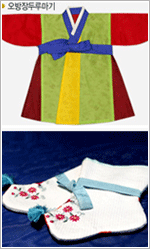
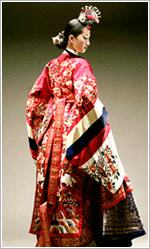
References: http://www.han-style.com/english/hanbok/meaning.jsp
About Korea (General Information)
South Korea, Seoul.. His capital is Seoul. The language is hangeul. The currency is "won". Korean's symbols are his flag called taegeuki, the flower national called mungungwa or it's know like "Sharon rose" and the national song called "Aegukga". About religion, most of the pupulation practice Buddhists, and the other part of the pupulation are protestants and catholics. Also, it's a placer where is know for the technologies (movile phones, cars, etc..) I think is a place because there are alot of nice views like many skyscrapers, bridges also temples. Nowadays it's know for the K-pop wave, korean dramas and korean culture.

Reference: Korea.net, facts about Korea, http://spanish.korea.net/AboutKorea/Korea-at-a-Glance/Facts-about-Korea
Reference: Korea.net, facts about Korea, http://spanish.korea.net/AboutKorea/Korea-at-a-Glance/Facts-about-Korea
Mind map
Hello everybody!
This blog is about culture but in specific about Korean culture. Perhaps, for you Korean culture is boring or something like that but it's not true.
I think that is interesting. So, I'll talk about that, specially about 10 important things about Korea. I hope you'll get fun in this web site.
This is a mind map about my publications. also I'll put the information sources. (: <3 Thanks...
Suscribirse a:
Entradas (Atom)